
Key Takeaways
- Spot-on accuracy: A Toyota window sticker helps you identify the vehicle's true original factory color.
- Skip the guessing: You can easily use the Toyota exterior color code VIN lookup to verify original exterior and interior colors.
- Codes over names: Factory paint codes are way more accurate than general color names alone.
- Cabin details matter: Toyota interior trim codes help identify the original seat material and interior color scheme.
- Must-have for verification: Pulling up the original window sticker is a total lifesaver when buying, restoring, or repairing a Toyota.
Have you ever tried ordering touch-up paint for your Toyota, only to realize there are like three or four shades that all look almost identical?
White is a great example. Toyota has used colors like Super White, Blizzard Pearl, Ice Cap, and a bunch of others over the years. They might look pretty similar from a distance, but they're completely different paint colors.
That's why knowing just the color name isn't always enough.
The easiest way to find the exact factory color is by checking the Toyota paint code or looking up the window sticker by VIN. The window sticker shows you exactly how the Toyota left the factory, including its original exterior color and interior trim, making it way easier to order the right touch-up paint or verify a used vehicle before you buy it.
If you're trying to find your Toyota exterior color code or trying to make sense of Toyota interior trim codes, this quick guide walks you through everything you need to know.
What Is a Toyota Paint Code?
So basically, a Toyota paint code is a short factory code that identifies the exact shade your vehicle was sprayed with before it rolled off the assembly line.
A lot of people think the paint color is simply "white" or "blue," but Toyota uses dozens of different shades for the same basic color family. Two vehicles might both look black sitting next to each other, for example, but each one could have a completely different factory paint code.
That's why body shops and paint suppliers always ask for the paint code instead of just a color name. The code completely removes the guesswork and helps match the paint as close to humanly possible.
Why Paint Codes Matter
The paint code might not seem like a big deal until you actually need it. Then suddenly, it's the main thing you're hunting for.
Ordering Touch-Up Paint
A small rock chip or scratch usually isn't the end of the world, but buying the wrong shade of white or silver can make the touch-up job stick out like a sore thumb. Using the real factory paint code gives you a much better shot at getting an exact match.
Collision Repairs
If part of the vehicle needs to be repainted after a fender bender, the repair shop will normally use the factory paint code as their starting point. It helps them mix the base color correctly before making minor tweaks for age or sun fading.
Restoring a Classic Toyota
If you're restoring an older Toyota, keeping things factory-correct can make a massive difference in its value. The factory paint code helps you confirm how the vehicle was originally specced instead of relying on what some previous owner might have repainted it over the years.
Verifying a Used Toyota
Sometimes a seller claims the paint is 100% original. Sometimes it definitely isn't. Looking up the original window sticker lets you compare the factory color with what's actually sitting in the driveway today. It won't tell you if a door panel was repainted, but it will tell you what color Toyota originally built.
READ ALSO: How to Get an Original Toyota Window Sticker for an Older Used Toyota (Step-by-Step)
Where Can You Find a Toyota Paint Code?
Toyota gives you a few different ways to locate the original paint color. Some are definitely easier than others.
On the Window Sticker
The original Toyota paint code window sticker details are one of the easiest places to start. Besides showing the trim level and factory options, it also explicitly lists the exterior color and interior trim that the vehicle originally came with.
If you're already pulling up the window sticker before buying a used Toyota, you can confirm the exact color at the same time.
On the Driver's Door Jamb
Most Toyotas also have a manufacturer label stuck right inside the driver's door jamb. Depending on the model and year, this sticker includes paint and trim code information stamped right on it. If the paper window sticker is long gone, this is usually the next physical spot people check.
Using the VIN
If you don't have the original paperwork sitting around, the 17-character VIN is usually all you really need. Looking up the Toyota exterior color code VIN information lets you retrieve the original factory build records tied to that specific vehicle. That's especially handy if you're shopping for a used Toyota online and want to confirm the original paint before making a drive to look at it.
How Toyota Paint Codes Work
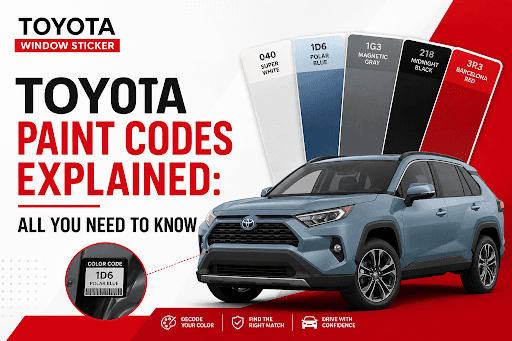
Toyota paint codes are usually made up of three characters using numbers, letters, or a combination of both. Each short code represents one specific factory color formulation.
Here are a few common examples you'll run into:
| Paint Code | Factory Color Name |
|---|---|
| 040 | Super White |
| 070 | Blizzard Pearl |
| 1F7 | Classic Silver Metallic |
| 1G3 | Magnetic Gray Metallic |
| 202 | Black |
| 218 | Midnight Black Metallic |
| 3R3 | Barcelona Red Metallic |
| 8X8 | Blueprint |
← Scroll horizontally to see more →
The main thing to remember is that the code is infinitely more accurate than the general color name. For instance, someone might describe their Toyota as "silver," but that doesn't narrow things down much because Toyota has used several silver variations over the years. The code tells you exactly which one it is.
What About Toyota Interior Trim Codes?
Finding the right exterior paint color is only half the battle. If you're replacing seats, fixing up torn door panels, or restoring an older model, you'll also want to know the original cabin specs.
That's where Toyota interior trim codes come into play. They identify the factory interior, including the exact color shade and the material used.
What Interior Trim Codes Can Tell You
Depending on the vehicle, Toyota interior trim codes help identify:
- Seat material (like cloth, SofTex®, or genuine leather)
- Exact factory interior color scheme
- Original trim package combination
- Specific cabin build specs used on the line
That info comes in super handy when you're sourcing replacement parts online or trying to keep a restoration project as close to factory spec as possible.
READ ALSO: Toyota Factory vs. Port-Installed Options: What's Your Window Sticker Really Telling You?
How to Read the Color Information on the Window Sticker
The window sticker includes way more than just the MSRP and gas mileage numbers. It's also one of the clearest places to verify factory colors.
Exterior Color
The exterior paint color is usually listed right near the top of the window sticker with the main vehicle details. This tells you the exact factory paint the Toyota left with, making it a breeze to order matching touch-up paint or confirm the original finish.
Interior Color
You'll also find the original interior color listed in the exact same section. If you're buying a used Toyota, it's always worth comparing this line with the car in front of you. If the sticker says the interior was originally black but the car currently has tan seats, there's a pretty good chance they've been swapped out or reupholstered down the road.
Why the Trim Level Still Matters
Some colors were only offered on specific trims or special editions. For example, a TRD Pro model might have an exclusive paint choice (like Voodoo Blue or Solar Octane) that was never offered on a base LE or XLE.
Checking the trim level alongside the color info gives you the full picture of how the vehicle was specced from the factory.
How to Find Your Paint Code Using the VIN
If you don't have the physical paper sticker sitting in the glove box, using the VIN is usually the easiest way to go.
Step 1: Locate the VIN
Grab your Toyota's 17-character VIN. You'll usually find it:
- On the driver's side dashboard near the windshield.
- Inside the driver's door jamb on the safety sticker.
- On your registration or insurance documents.
- Printed on the title.
Step 2: Visit ToyotaWindowSticker.com
Head over to our VIN lookup tool and drop the VIN into the form. In seconds, you'll be able to pull up the original window sticker for that specific Toyota in just a few moments.
Step 3: Review the Factory Color Information
Once the window sticker generates, take a look at the vehicle information section for:
- Exterior paint color name and details
- Interior color and material specifications
- Trim level and factory packages
- Original MSRP
Note: If an original window sticker isn't available for older classic models, build sheets are also available for most classic Toyota models and can still give you those vital factory color details.
Tips for Getting the Right Paint Match
A lot of paint problems start before the first coat is even sprayed. Here are a few things worth checking before you order paint or replacement interior parts.
- Don't rely on the color name alone. Names like "White" or "Silver" sound simple, but Toyota has used several different shades over the years. The factory paint code is much more accurate.
- Don't assume similar-looking Toyotas use the same paint. Two Camrys parked side by side might look identical, yet have completely different factory paint codes.
- Check the interior too. If you're replacing seats or interior panels, the Toyota interior trim codes can help you order parts that actually match what the vehicle came with.
Final Thoughts on Toyota Paint Codes
Getting a flawless match always comes down to having the exact factory info in front of you.
Instead of guessing the shade or taking a seller's word for it, taking a quick look at the original window sticker or running a VIN lookup is the smartest move. It lets you verify the true exterior color, decode the interior trim setup, and make sure you're ordering the right parts, or paying the right price for a used car.
A couple of minutes spent checking the factory records now will save you a whole lot of time, money, and frustration down the road!
FAQ on Toyota Paint Codes
Where is the Toyota paint code located?
The Toyota paint code is located on the original window sticker, on the manufacturer's label inside the driver's door jamb, or retrieved by running a VIN lookup. Checking the Toyota paint code window sticker info is usually the fastest way to confirm it.
Can I find my Toyota exterior color code VIN?
Yes, you can find your Toyota exterior color code VIN information by running a VIN lookup. Entering the 17-character VIN into ToyotaWindowSticker.com allows you to pull up the factory build records and view the original paint details.
Does the window sticker show the paint code?
Yes, the window sticker shows the original factory paint color and interior specs. It is easily one of the best tools to verify exactly how the vehicle was finished when it left the assembly line.
What are Toyota interior trim codes?
Toyota interior trim codes are specific factory codes that identify the interior color, material, and build specifications for a vehicle. They help you confirm whether the car originally came with cloth, SofTex®, or leather, as well as the exact cabin color scheme.
Can I get paint information for an older Toyota?
Yes, you can get paint information for an older Toyota. If the digital window sticker isn't available for an older model, a build sheet can usually be generated using the VIN to show the original factory paint and trim info.