
Key Takeaways
- A VIN audit combines several checks to give you a better picture of a used Toyota.
- A Toyota VIN lookup free specs is a good place to start, but it shouldn't be the only check you perform.
- You can check the Toyota VIN for original packages, factory options, and specifications using the VIN.
- Running a Toyota recall and history check helps you identify open recalls and other important records.
Buying a used Toyota can save you a lot of money, but it can also come with surprises if you don't do your homework first. A vehicle might look great in the photos, drive well during a quick test drive, and still have a history you know nothing about.
That's why checking the Toyota VIN is one of the smartest things you can do before handing over your money.
The VIN can tell you much more than the make and model. It can help you find out the vehicle's history, verify how it left the factory, check for recalls, and confirm that the seller's description actually matches the Toyota you're looking at.
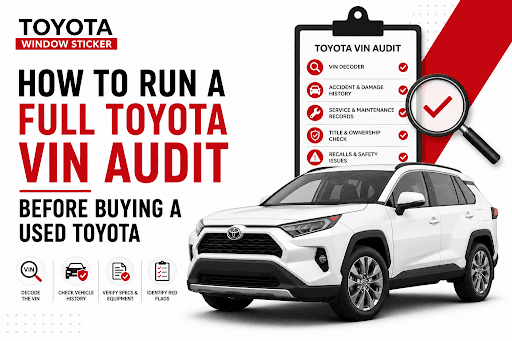
If you're planning to buy a used Toyota, here's how to run a complete used Toyota pre-purchase VIN check before making your decision.
What Is a Toyota VIN Audit?
A lot of people think running the VIN means getting one report and calling it a day. It doesn't really work like that.
A complete VIN audit combines several different checks, each answering a different question about the vehicle. One report might tell you about accidents, recalls, theft records, and title history. Another, a window sticker, confirms the original factory equipment.
Looking at all of them together gives you a much better understanding of the Toyota you're thinking about buying.
Why It's Worth Doing Before You Buy
Even honest sellers don't always know everything about the vehicle they're selling.
Maybe they bought it used themselves. Maybe they forgot which package it came with. Sometimes they're simply repeating information from the previous owner.
A VIN audit helps you verify those details yourself instead of relying on memory or assumptions.
Confirm the Trim Level
Some Toyota trims are easy to recognize.
Others aren't.
For example, two RAV4s might look almost identical, but one could be an LE while the other is an XLE Premium. Looking up the VIN helps confirm exactly which trim Toyota built.
Verify the Factory Options
This is one of the biggest reasons to check the VIN. The listing might say the vehicle has a Premium Package or heated seats, but the factory records tell you what it originally came with.
That's especially useful if you're comparing several used Toyotas with similar prices.
Check the Vehicle's History
The history of a vehicle can affect both its value and your buying decision. That's why it's worth checking for previous accidents, title problems, or major events before you commit.
We'll look at that in more detail next.
Check for Open Recalls
A recall doesn't automatically mean you should walk away from the vehicle. It simply means Toyota identified a problem that may require attention.
The important thing is knowing whether any recalls are still open and whether they've already been repaired.
Step 1: Start With a Vehicle History Check
The first thing many buyers do is run a Toyota VIN lookup history.
That's a good place to begin because it gives you an overview of the vehicle before you spend money on more detailed reports.
What Can a History Check Tell You?
With our Toyota VIN check tool, you can find information about:
- Previous accidents
- Title brands
- Odometer records
- Previous owners
- Theft records
- Open recalls
- Registration history
A free lookup only shows basic information, including vehicle specifications, market value, etc., while paid reports often include additional records collected from insurance companies, state agencies, auctions, and other sources.
Accident History
An accident doesn't automatically make a Toyota a bad purchase. The important thing is understanding what happened.
A minor parking lot repair is very different from a vehicle that suffered major structural damage.
Title Problems
This is another area buyers sometimes overlook. A history report may show if the Toyota has a salvage, rebuilt, flood, or other branded title.
Knowing that before you buy can help you avoid unexpected surprises later.
Odometer Records
Checking the mileage history can also help you spot inconsistencies. If the mileage suddenly drops between two records, it's worth asking the seller for an explanation.
Open Recalls
An open recall means Toyota has identified a problem, but the repair hasn't been completed yet. If you're buying the vehicle, ask the seller if the repair has already been scheduled or completed.
You can also see previous recalls that were fixed in the past with a history check.
Step 2: Verify the Factory Build
Once you're comfortable with the vehicle's history, the next step is confirming how Toyota originally built it with a window sticker.
This is where the VIN becomes even more useful.
A wndow sticker lookup helps you check Toyota VIN for original packages, specifications, and equipment so you can compare the records with the vehicle you're actually looking at.
It shows information such as:
- Trim level
- Factory options
- Original MSRP
- Standard equipment
- Exterior and interior colors
- Fuel economy, and more.
If the seller says the vehicle came with a Premium Package or Technology Package, the window sticker is one of the best places to confirm it.
Factory Options and Packages
A lot of used Toyota listings mention things like a Premium Package, Technology Package, or Cold Weather Package. Sometimes they're right. Sometimes they aren't.
Checking the factory records helps you verify original packages instead of relying on the seller's description.
It's also an easy way to compare two similar vehicles. One might have several factory upgrades, while the other came with only the standard equipment.
Original MSRP
The original MSRP gives you a better idea of how the vehicle was equipped when it was new.
For example, two used Highlanders might both be listed for around the same price today. One originally cost several thousand dollars more because it included extra factory options.
Looking at the MSRP alongside the equipment list helps explain those differences.
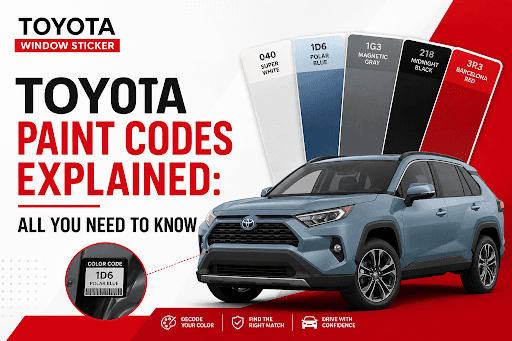
Paint and Interior Colors
The factory build also shows the original exterior and interior colors.
This can be useful if you're restoring the vehicle, ordering replacement parts, or simply confirming that the Toyota still matches its original factory specifications.
Engine and Transmission
Never assume the engine or transmission is correct just because that's what the seller wrote in the listing.
A window sticker lookup helps confirm the original engine, transmission, and drivetrain so you know exactly what Toyota built.
Step 3: Compare the Reports With the Vehicle
This is the step a lot of buyers skip.
You've looked at the reports. Now compare that information with the Toyota sitting in front of you.
Walk Around the Exterior
Check that the paint color matches the factory records.
Look for panels that don't line up properly, uneven paint, or signs that parts have been replaced.
Check the Interior
Compare the seats, trim, and major features with the factory equipment listed on the window sticker.
If the records show heated seats but the vehicle doesn't have them, that's something worth asking about.
Verify the Features
Turn things on and make sure they actually work.
Try the power liftgate, navigation system, heated seats, sunroof, or any other factory options the records say the vehicle came with.
Step 4: Take It for a Test Drive
A VIN audit tells you a lot, but it doesn't replace driving the vehicle. Listen for unusual noises, check how the transmission shifts, pay attention to the steering, and make sure everything feels as it should.
Think of the VIN audit and the test drive as two parts of the same process. One tells you about the vehicle's past, while the other helps you understand how it performs today.
Use What You Find to Negotiate a Better Price
Running a VIN audit isn't just about spotting problems. It also helps you understand what the Toyota is actually worth.
If the VIN check uncovers something the seller didn't mention, or something that doesn't match the listing, you've got a solid reason to negotiate. You're not making up reasons to lower the price, you're using facts about the vehicle.
The Vehicle Doesn't Match the Listing
Sometimes a seller advertises a Toyota as having a Premium Package or a higher trim, but the factory records tell a different story.
| If You Find | Why It Matters | How It Helps You Negotiate |
|---|---|---|
| The trim is lower than advertised | The vehicle may be worth less than the asking price. | Show the factory window sticker and base your offer on the correct trim level. |
| Factory packages are missing | The Toyota doesn't have the equipment listed in the ad. | Explain that your offer reflects the actual factory build. |
← Scroll horizontally to see more →
There Are Open Recalls
Finding an open recall doesn't always mean you should walk away, but it's something that should be discussed before you buy.
| If You Find | Why It Matters | How It Helps You Negotiate |
|---|---|---|
| An open recall | The repair still needs to be completed. | Ask the seller to fix it before the sale or consider the extra time and effort when making your offer. |
← Scroll horizontally to see more →
The Vehicle Has an Accident History
Not every accident affects a vehicle the same way, but it's still useful information when discussing price.
| If You Find | Why It Matters | How It Helps You Negotiate |
|---|---|---|
| Previous accident records | Accident history can affect resale value. | Use the vehicle history report to explain why you're offering less than the asking price. |
← Scroll horizontally to see more →
The Service History Has Gaps
Missing maintenance records don't always mean the Toyota wasn't looked after, but they do create a little uncertainty.
| If You Find | Why It Matters | How It Helps You Negotiate |
|---|---|---|
| Long gaps in maintenance history | You may need to budget for servicing after purchase. | Factor those expected maintenance costs into your offer. |
← Scroll horizontally to see more →
Keep the Conversation Friendly
Most negotiations go better when you stick to the facts.
Instead of saying the vehicle is overpriced, explain what the VIN audit showed.
"I really like the vehicle, but after checking the VIN, I noticed it's missing the package mentioned in the listing. Based on the factory specifications, I'd be comfortable offering $X instead."
That approach is much more likely to lead to a productive conversation than simply asking for a discount.
Final Thoughts on Toyota VIN Checks
Buying a used Toyota doesn't have to be a guessing game.
A complete VIN audit helps you look beyond the photos and seller's description by showing the vehicle's history, factory build, original packages, and recall information in one place.
The more you know before you buy, the easier it is to compare vehicles, ask the right questions, and feel confident that you're making the right decision.
FAQs on Toyota VIN Checks
Can I perform a Toyota VIN lookup to check history?
Yes, you can perform a Toyota VIN lookup to check history. Free VIN lookups are a decent starting point for basic details, but paid vehicle history reports offer way more depth when you need to uncover hidden accidents, title issues, or service records.
How do I check Toyota VIN for original packages?
You check a Toyota VIN for original packages by pulling the digital window sticker or factory build sheet. Entering the 17-character VIN into a window sticker lookup tool reveals the exact option packages, standalone upgrades, and extra factory gear installed on the vehicle when it was manufactured.
What does a Toyota recall and history check show?
A Toyota recall check shows open safety recalls, completed recall repairs, title transfers, and accident history. It helps you spot unaddressed safety issues or major red flags before you ever make an offer on a used car.
Is a window sticker the same as a vehicle history report?
No, a window sticker is not the same as a vehicle history report. A window sticker shows how the Toyota was originally built at the factory (MSRP, options, trim), while a vehicle history report tracks what happened to the car after it was sold, including accidents, owners, and title changes.